- Node Mode
- Posts
- The Growth Paradox
The Growth Paradox
Why We Need New Metrics

Aydıncan Ataberk
December 09, 2025
Hey everyone 👨🎨
Get ready for a month full of reflections and predictions. I’ll be writing 3 pieces in a row, starting with the first one diving deep into current world situation.
Enjoy!
↓ Level 1: Services marketing academia has already shifted its focus from "growing the company" to "transforming the user's life." At the same time, well-being metrics are gaining ground as alternatives to GDP.
↓ Level 2: The tension between the two meanings of "growth" exposes the contradiction at the heart of the entire system: maturity vs. accumulation.
↓ Level 3: Without any limit to growth seen on the horizon, we're creating "a future nobody wants". So maybe bubbles might be civilization's call to recalibrate itself.
Towards 2050
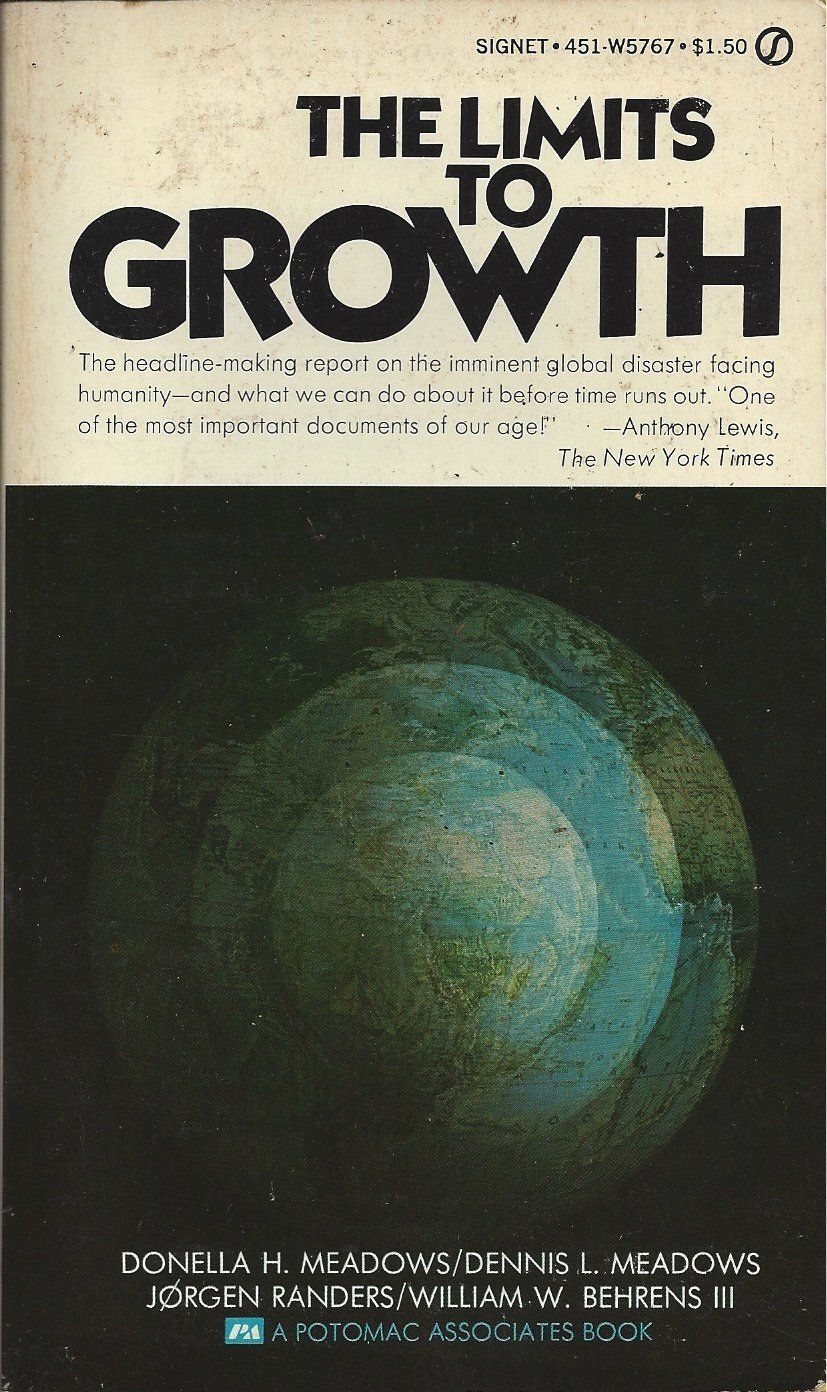
Fifty-three years ago, a group of MIT researchers conducted a study on where endless growth might end. The lead author Donella Meadows and colleagues supported their research with computer simulation, quite novel and experimental for the time, and published their findings in 1972 in a book called "Limits to Growth." From the moment of publication, the researchers were absolutely lambasted, accused of being doomsayers, condemned as reactionaries and dragged through the mud. The book's model predicted that toward the mid-21st century, population, resources, and production would enter serious stagnation. When researchers today reevaluate the model from this book, which celebrated its 50th anniversary in 2022 and has sold 30 million copies, they find it "surprisingly" accurate. So where we really are now?
The Awakening
Looking through my service designer/academic lens, there's been a significant shift in service experience research over recent years, steadily gaining momentum. Two core concepts drive this shift: "Transformative Service Research" and “Well-being”. From the early 2000s, service efficiency dominated the field for a long time. In other words, what the customer journey ultimately delivered to the company served as the fundamental measure of service experience. Loyalty, customer lifetime value, repeat purchases, upgrades to premium tiers, all serving one purpose: growth. Based on my personal experience, I can say this remains practically true for many brands and corporate entities.
Later, well-being research initially manifested through an accessibility focus, then gradually expanded into literature encompassing all “consumers.” Well-being theories suggest, for instance, that a fintech service shouldn’t merely preserve or grow a user's financial assets at the core benefit level, but should transform the user’s financial stance, knowledge, and behavior for their own good. It may even improve the well-being of the user’s community at the meso level. In short: not "milking customers" to grow the company, but creating growth opportunities for everyone. We’ve also seen a similar focus in service design in recent years, discussed extensively under related topics like environmental design, planet-centered design, and 360 design.
The Growth
But let’s unpack the meanings of "growth." As used so far, growth describes maturity, ripening in a particular domain. In nature, growth means a baby growing, a tree expanding its branches, a fruit growing and becoming more nourishing. But there's also growth in the sense of "accumulation." This has more to do with human nature and late stage capitalism.
The core problem with this second meaning of growth becomes clearer when we consider the invention of GDP, the fundamental modern measure of whether a society is “progressing.” Much debated since its introduction in the 1940s, GDP has become a serious discussion point now that the world's resources are demonstrably depleted. The thesis that growing GDP doesn't bring well-being to all a country's citizens forms the foundation of the anti-GDP camp. Instead it comes with many defects: income inequality, unemployment, irregularities in health and education. In this context, movements like Degrowth or initiatives like the OECD Better Life Index are trying to shift the issue toward new metrics at the policy level.
Yet when I pick up this years The Economist's "The World Ahead in 2026" issue, I still see both the world's general outlook and individual country analyses conducted through GDP growth rate. Because at the end of the day, a businessman wants to compare "apples to apples." Despite millions of different lives, dozens of conflicts costing lives, hundreds of different climate conditions, hundreds of different geographies and cultures, at the end of the day business comes down to comparing two numbers: Brazil 1.7%, Kazakhstan 4.8%. Though 11-year-old Luiz in a Rio de Janeiro favela thinking about the two goals he scored this morning, and Temir who'll drive the morning shuttle to Baikonur tomorrow, have no idea, The Economist puts these numbers above their heads. Luiz doesn't know that this number will determine whether his favela gets new infrastructure or remains invisible. Because measuring, putting into a ranking, categorizing and ordering is a matter of power. To dominate, one must first be able to measure. GDP growth serves this purpose.
But as Ms. Meadows and collegues asked, does growth really have an end? How much longer can it be sustainable for anyone in the world to use any of the world's resources to produce and sell as much as they want? Is there no limit to accumulation? Those are the questions I’m sure we all ask ourselves when a new billionaire sets a new record defining the limit for the greatest fortune a human being can possess in history.
"Why are we creating a future that nobody wants?"
I took the heading directly from a YouTube essay I watched recently because I don't think there could be a better statement summarizing our current situation. With every news headline about AI bringing our end, with every product update video from Boston Dynamics, every time we see defense budgets' growing share of national economies, I think we all experience similar feelings. In fact, my lawyer wife has a much more direct take on this: "Nobody asked me if they can develop AI forever. I didn't sign up for this."
Like the billionaire tech founders running the world, I too grew up on science fiction. I've also been waiting for years for computers and robots to talk, and do some work. Maybe this is why we're overly excited about AI. However, I admit that despite warnings from our cyberpunk forefathers like William Gibson about mega-corporations built on endless exploitation, I naively wanted to see this day without thinking through the causes and consequences. We were expecting AI to find the cure for cancer, but a video app for creating endless AI slop, that, we were not.
As opposed to creating a future nobody wants, voices around the world are rising, as should be clear from where we've arrived since the beginning of this piece. We're aware of the problem, but perhaps we don't have a toolset large enough to encompass human civilization.
Bubbles are Good
Correction is a market term which I adore. It describes the market's "oops, we overvalued this a bit, taking some back from the top" reaction. Bubbles are bigger, a bit harsher than corrections and instantly disappear while taking part of the market down with them. The emergence of alternative systems sometimes depends on these massive corrections. So maybe, going towards creating a future nobody wants, a bursting bubble is all we need. Maybe then we’ll have a new toolset large enough to set new rules.
2026 might be the year when the expected correction produces unexpected consequences. But as builders, we can ask ourselves from today: what can we correct in our trajectory to transition toward a growth that bears fruit?
Node Mode [Off][ ]
Peace,
Aydıncan.
Reply